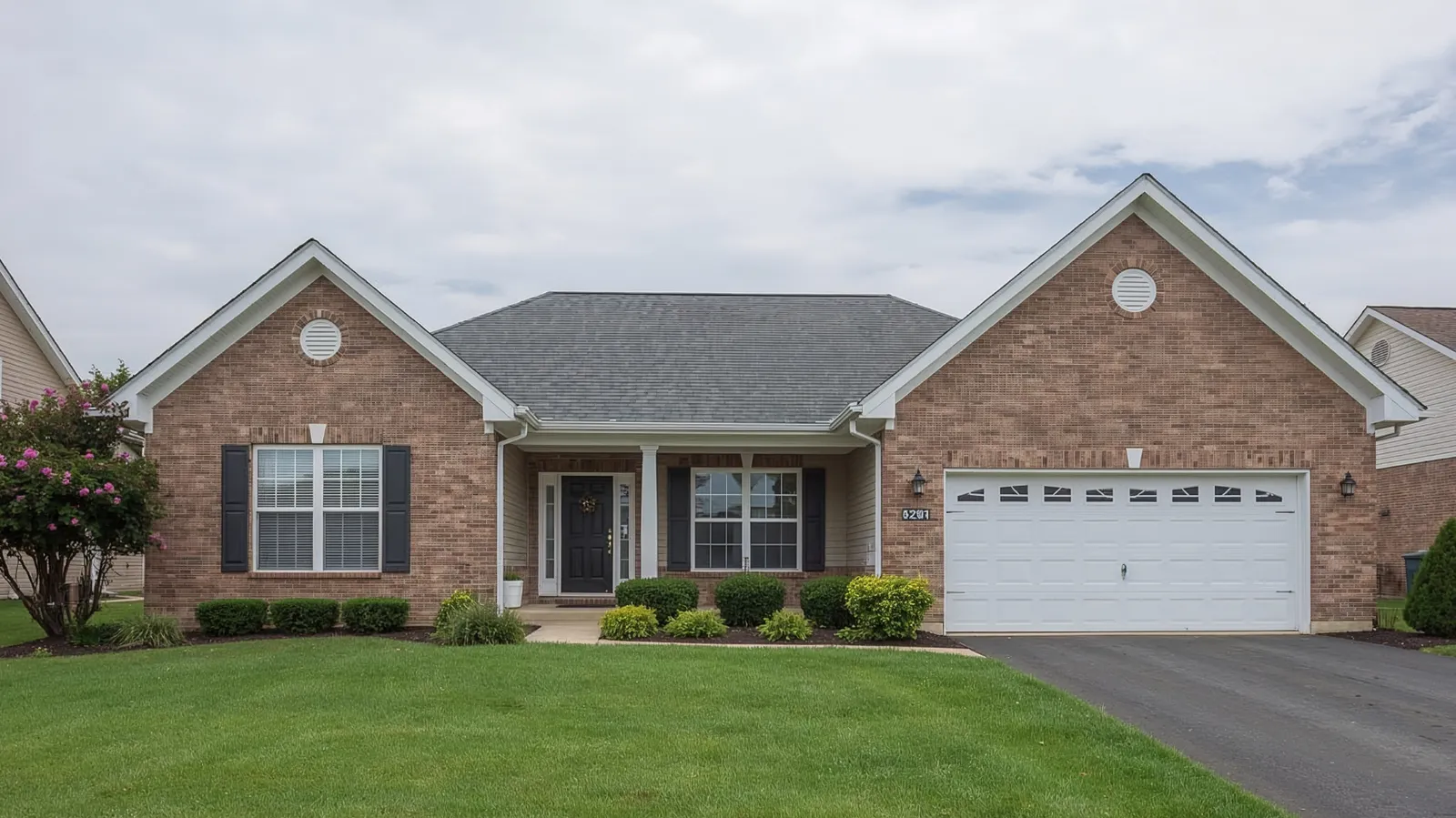
Hail Damage Roof Repair in Olathe, KS
Johnson County sees moderate but real hail, up to 3.50 inches on the county record. A local roofer climbs up, dates the hail damage to its storm, and photographs every slope, free.
- Scope and dollars in writing, then work
- Hail-claim paperwork put in plain English
- One roofer handling the whole job
Call (913) 210-3979
Why Olathe hail damage needs a read on the roof
Johnson County does not get the giant stones some markets do. Its record runs 11 hail days, topped by a 3.50-inch stone near Wilder in March 2024, with golf-ball and ping-pong hail in Olathe itself that May. Moderate hail still bruises and cracks a shingle, and on an aging roof even a modest stone can open a leak.
A local roofer climbs up, dates each hail break to the storm on record, and tells it from the granule loss of ordinary aging. Any claim you decide to file stands on that dated read.

The marks a hailstorm leaves, slope by slope
Each item gets its own photo and a date before the roofer moves on.
- 01Bruised and cracked shingles, told from wear
- Moderate hail still bruises the mat and can crack a tab, and a roofer separates those fresh storm marks from the even granule loss ordinary aging drags out of a shingle over time, so the repair answers the hail and not old wear.
- 02Dented gutters, vents, and soft metal
- Hail dents gutters and vent hoods and can hole thin flashing, the collateral that both leaks and ties the storm to one datable day on the Johnson County record.
- 03Wind-lifted and creased tabs alongside the hail
- The storms that carry hail here often bring gusts toward the county 89-mph record, creasing and lifting runs of tabs, so a roofer notes each one even where a tab has dropped back into place.
- 04The eaves and flashing checked while up there
- While on the roof a roofer checks the eave detailing, valleys, and flashing that carry the water off, so a hail repair does not leave a weak joint behind it to leak in the next rain.
That dated file is what carries a fair claim. A documented inspection checks a doubtful roof against the Johnson County storm record and tells you plainly whether the last storm reached you.
How the storm gets read, dated, and repaired
Each slope walked, every mark tied to its storm, the repair kept to what broke.
Every slope walked, each mark photographed
A local roofer moves plane to plane, marking and shooting each bruise, crack, dented vent, and lifted tab, since none of it reads clearly from the driveway on a moderate-hail roof.
Storm marks separated from ordinary wear
Each photo is time-stamped and set against the county's logged hail dates, so a fresh hail break is told apart from the even granule loss already on the roof, and a loss date lands on a storm an adjuster can verify.
The roofer on the roof with the adjuster
The day the insurer's ladder goes up, a local roofer climbs alongside and walks the adjuster to every mark already in the file, so the damage is seen up close rather than judged from the lawn. The brand never climbs a roof or sends a crew; a local roofer does the documenting.
Only the broken shingles replaced and blended
The repair is kept to the shingles the hail truly broke, blended into the covering already up, so the sound slopes stay untouched and you pay for the actual damage, not a slope more.
After a hailstorm, what to look for
The marks worth a closer look after a Johnson County storm.
- Shingles that look bruised, cracked, or dulled in patches after a storm
- Granule shed filling the gutters, heavier than a normal season's
- Dented gutters, holed vent hoods, or bent flashing up top
- Tabs lifted or creased by the wind that arrived with the hail
- A brown ring on a ceiling weeks later, long after the storm slipped your mind
Almost none of this reads from the yard, so an hour on the roof with a documented inspection is worth it after any Johnson County storm, even one the roof seems to have shrugged off. If a spot is actively leaking: photograph everything, then tarp the opening; that protection is required by the policy and reimbursed.
Repair the hail, or is it time to replace?
Moderate hail more often means a targeted repair than a full replacement, which is one way an Olathe roof differs from a big-stone market. A storm that bruises and cracks a few slopes usually gets those shingles fixed, not the whole roof torn off.
No price is quoted, though, until the roof is read. The repair figure goes in writing only once the slopes are photographed, and when age or years of wear have stacked on top of the hail, a full replacement with a claim to defray it can be the wiser spend. Per-square ranges sit in the new-roof cost guide.
See the per-square ranges- Hail that only dulls or lightly bruises a slope usually reads as a targeted repair
- A slope with cracked or split tabs may need those shingles replaced and blended
- When years of wear and age sit under the hail, a full replacement can be the better value
- The figure is set only after the slopes are photographed, so it holds firm afterward
An Olathe roof takes hail and a hard winter
Olathe sits in a two-season climate, not a single hail belt. Johnson County logs moderate summer hail, up to 3.50 inches on the four-year record, and a Kansas winter tests the same roof after. So a hail visit is worth using well.
A roofer who knows Olathe roofs marks every hail break, then reads the eaves, flashing, and ventilation while up there, so one visit does double duty. With a climate this demanding it is worth weighing impact-rated Class 4 shingles at your next re-roof.
- 01Hail from above, wind from the side
- Hail strikes the roof from above in the warm months, and the same storms bring straight-line wind that lifts and creases tabs from the side, so a roofer reads for both rather than one.
- 02Moderate hail, but a shingle still cracks
- A 3.50-inch stone is not the giant some markets see, yet moderate hail still splits tabs and bruises the mat, and on an older roof it can open a leak that was not there before.
Not sure the last storm even touched your roof? A documented inspection checks it against the Johnson County record and gives you a clear answer, on your own timeline.
Hail damage questions Olathe homeowners ask
What comes up after a Johnson County hailstorm.
Q1Is moderate Johnson County hail really enough to damage my roof?
Q2How do you tell hail damage from ordinary wear?
Q3In Kansas, how long do I have to file a hail claim?
Q4My neighbor got a new roof after the same storm and mine looks fine. Normal?
Q5Why does a roofer being on the roof with the adjuster matter?
Q6Should I fix the hail damage and other roof issues in one visit?
Get the hail on record before you patch
After a hail day, get the damage on record before you decide anything. Hand Olathe Roofing Co your address, and a local roofer dates each mark to the storm on the Johnson County record, gives you the plain call between a repair, a new roof, and a claim, and can be up on the roof when the adjuster comes.