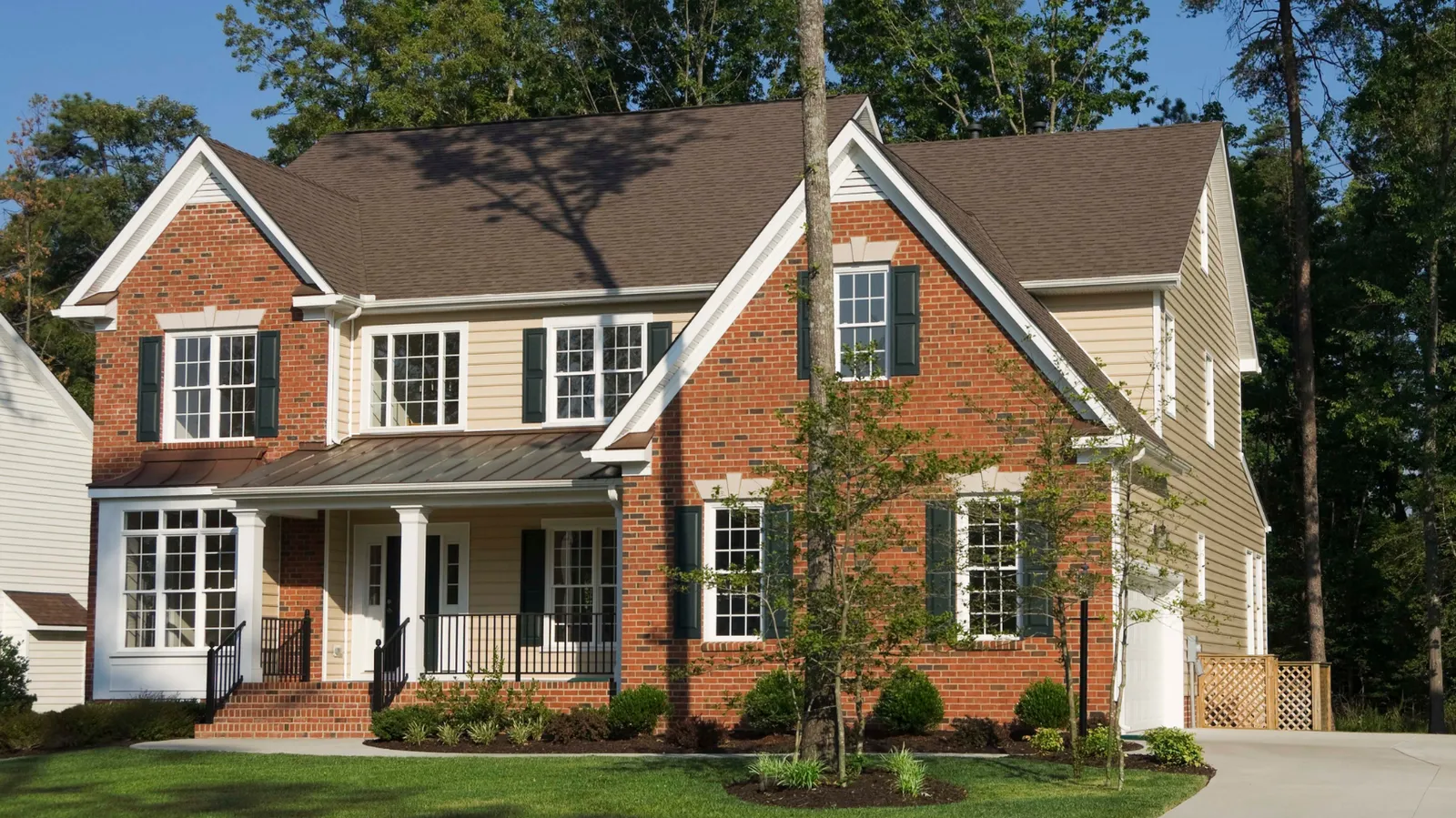
Soffit and Fascia Repair in Olathe, KS
The soffit and fascia close in the eave and hold the roof's intake vents, so rot there lets water and pests in. A local roofer repairs the wood and the venting together.
- Scope and dollars in writing, then work
- Hail-claim paperwork put in plain English
- One roofer handling the whole job
Call (913) 210-3979
Why the eave is where a roof rots first
Soffit and fascia repair in Olathe, KS is where a wet roof edge shows up first. The fascia is the board along the roof edge that the gutter fastens to, and the soffit is the panel beneath it that feeds the attic its intake air.
When a clogged or overflowing gutter backs water into that eave, the fascia soaks and rots and the soffit stains, and new gutter hung on soft wood only fails again. A local roofer repairs the wood and restores the intake venting in one pass, because the two are one job at the eave.
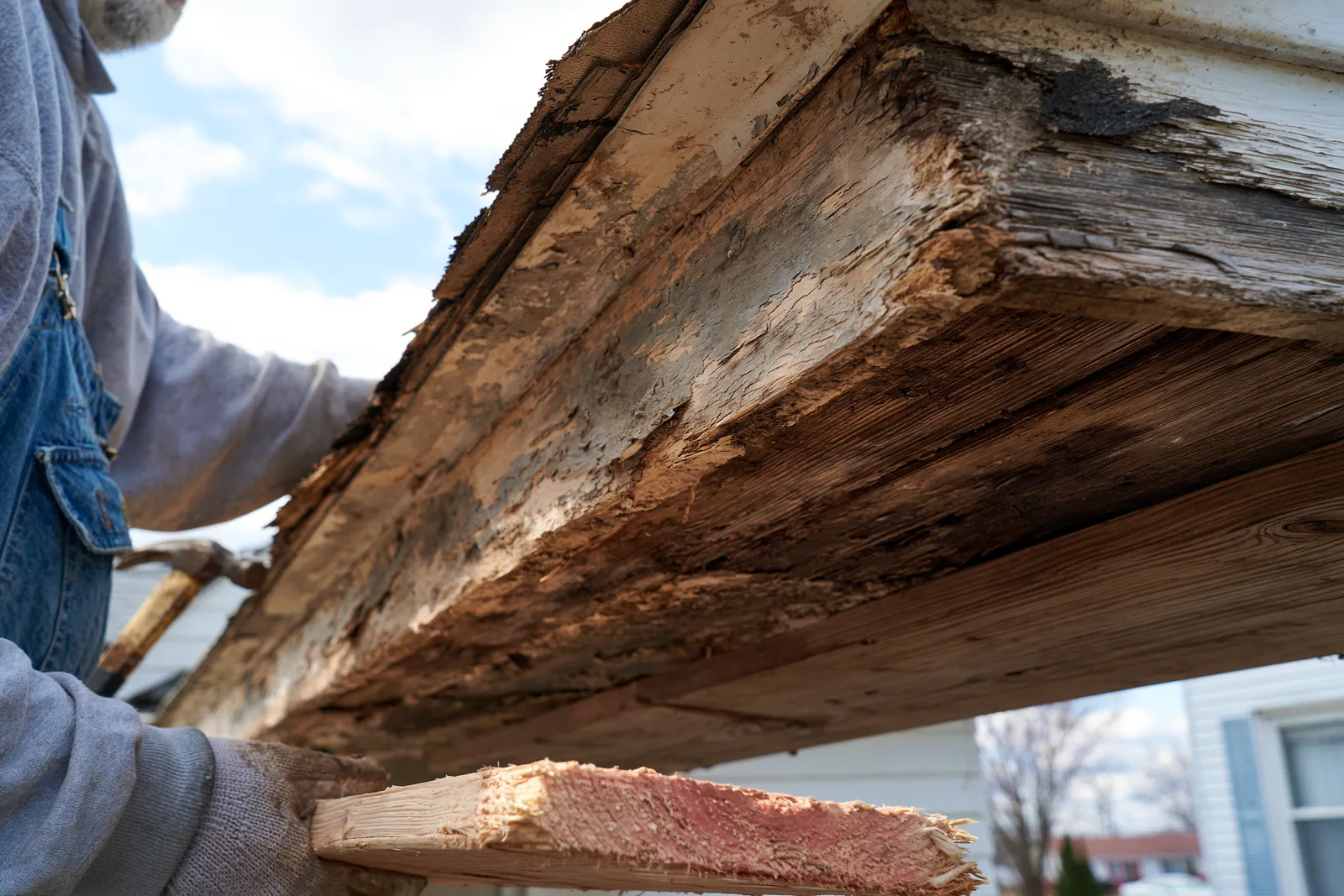
What a soffit and fascia repair covers
The wood and the venting a roofer restores together at the eave.
- 01Rotted fascia replaced before the gutter goes back
- Soft or rotted fascia cannot hold a gutter fastener, so a roofer cuts out the bad board and sets sound wood first. New gutter hung on punky fascia just sags and overflows, which is why the wood comes before the metal.
- 02Soffit intake venting cleared and restored
- The soffit is where the attic draws its intake air, so any blocked, stained, or damaged panel is opened back up with the vent working and a baffle keeping insulation out of the channel. Balanced intake also helps hold off ice dams, since it keeps the roof deck cold, and an ice dam only forms when a warm deck melts snow that then refreezes at the cold eaves.
- 03The drip-edge and eave handoff rebuilt
- Metal at the edge is set so water leaves the shingles, crosses the drip edge, and drops into the gutter rather than behind it, the handoff that keeps the fascia dry through every rain.
- 04Gaps closed against water and wildlife
- A hole in the soffit or fascia is an open door, so it is sealed against wind-driven rain and against the birds, squirrels, and wasps that move into an attic through a broken panel.
Fascia and soffit almost always quote with the gutter run, so a documented inspection reads the whole roof edge as one system before any number is set.
Signs the wood at your roofline is failing
What tells you the eave is taking on water, not just aging.
- Peeling or bubbling paint on the fascia board behind the gutter line
- Dark stains or streaks running down the wood under the gutter
- Fascia that feels soft or spongy when a screwdriver is pressed into it
- A gutter line that sags or pulls away as its fasteners lose the wood
- Water stains or mildew on the soffit panels under the eave
- A gutter line that overflows behind the fascia in a hard rain
Several of these together point to a drainage and venting problem at the eave, not a paint problem, and that is the read a roofer settles before it rots further.
What soffit and fascia repair runs
Soffit and fascia repair is priced by the foot, so the number turns on how much wood has actually gone soft, not on the whole eave. A short rotted section costs far less than a full run, and because the roofer is already at the roof edge, the work is usually quoted alongside a gutter replacement or during a re-roof when the eave is open.
Treat any figure before the visit as a rough bracket; the real number waits on a roofer reading how far the rot has traveled behind the gutter.
See how the ranges add up- Priced per linear foot, driven by how much fascia is actually rotted
- A targeted section costs far less than replacing the whole eave
- Usually quoted with the gutter run or while a re-roof has the eave open
- The written quote is the real number, set after a roofer reads the wood
The eave detail on an older Olathe roof
The eave is the wettest edge of an Olathe roof, and the first to go on an older home. Water leaving the roof concentrates right at the overhang, and a clogged gutter, a tired drip edge, or a soffit that has lost its venting all keep the fascia and soffit damp, right where they are hardest to keep dry.
Once the wood softens, the gutter it holds starts to sag and spill even more water onto it, so the problem feeds itself. A local roofer treats the wood, the venting, and any leak at the eave as one problem, because that is where an older roof gives first.
- 01Water concentrates at the overhang
- The eave is where all the roof's runoff funnels past the gutter and drip edge, so it is where the fascia and soffit take the most water and rot first.
- 02Read it after a wet season
- A stretch of heavy rain works at the eave, so a look afterward catches rot before it spreads.
Fix the wood and the venting together and the eave stops feeding the next leak.
Soffit and fascia questions Olathe owners ask
Plain answers about the wood and venting at your roofline.
Q1Why does the fascia rot in the first place?
Q2Is peeling paint at the roofline really a water problem?
Q3Can I just replace the gutter and leave the fascia alone?
Q4What does the soffit have to do with the attic?
Q5Is storm damage to the soffit and fascia covered by insurance?
Q6Do you handle the birds or squirrels living in the soffit?
Fix the roofline before the rot spreads
Paint peeling at the roofline, or fascia gone soft under the gutter? Send the address and a photo of the eave to Olathe Roofing Co, and a local roofer reads the fascia and soffit venting together and gives you a plain repair call before the rot opens the wood up further.