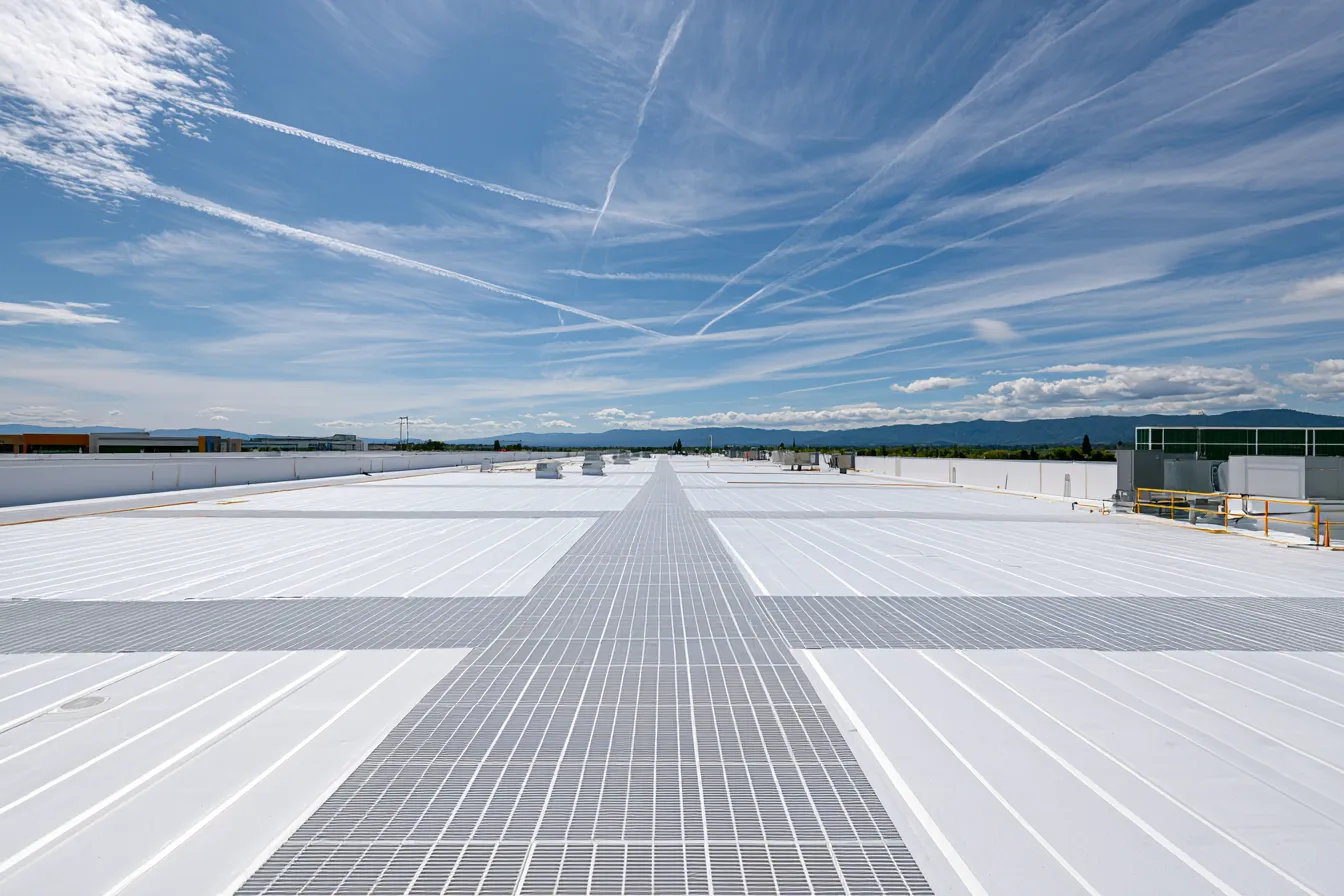
Commercial Flat Roof in Olathe, KS
A commercial flat roof in Olathe, KS is built to drain, not to sit flat, and it fails at the drains and seams. Ponding water and loose seams are what a roofer checks first.
- Drains and seams checked and dated
- EPDM or membrane matched to the building
- A dated read, then one written scope
Call (913) 210-3979
What a commercial flat roof faces in Olathe
A commercial flat roof is really a low-slope roof, built with just enough pitch to move water toward its drains. Storefronts, offices, and warehouses across Olathe carry one, most often a single-ply membrane like EPDM or TPO, and the roof holds only as long as water keeps leaving it.
Drainage is where a flat roof is won or lost. A local roofer reads the drainage, the seams, and every rooftop penetration, because standing water, a lifted seam, or a failed curb detail are what turn a small gap into a leak. The read goes on record before any repair or replacement is priced.

What a flat-roof read puts on record
Whether the answer is a repair or a new membrane, a flat roof comes down to a short, visible list, weighed before a price.
- 01Positive drainage, checked drain by drain
- A flat roof sheds water only if it drains, so a roofer reads whether every drain, scupper, and downspout actually clears. Building code expects the roof to handle water even if a primary drain clogs, which is why backup overflow drainage matters, and a clogged drain is a real risk on any Olathe roof.
- 02Ponding that turns to ice
- Water that sits instead of draining is a flat roof's first enemy, and in Olathe that standing water freezes, adds weight the roof was never meant to hold, and works at any weak seam beneath it. A roofer finds the low spots and the slow drains before a hard freeze locks water on the roof.
- 03Rooftop traffic and debris at the drains
- HVAC service, leaves, and windblown grit collect at the low points and choke the drains a flat roof depends on. A roofer clears and checks the drainage path so water leaves the roof rather than pooling and working at the seams.
- 04EPDM and the seams that hold it
- EPDM is a synthetic-rubber membrane with a long track record and real flexibility, which is why it holds up well on a wide Olathe roof, where a welded TPO membrane is the lighter, reflective alternative. The weak point is the seams where sheets join, so a roofer reads and maintains them, because a loose seam is where the leaks start.
- 05Flashings and penetrations detailed and sealed
- Every parapet, curb, and pipe is a place the membrane is interrupted and sealed, and those details are where a flat roof leaks first. A roofer reworks brittle or lifting flashing so water cannot find the deck behind it.
Hail treats a flat roof no better than a pitched one, it just hides the damage: a membrane bruised or a seam split by summer hail shows nothing from the lot. A local roofer gets up close, photographs and dates any storm damage, and when the membrane is sound but tired, the roof coatings page covers restoring it instead of tearing it off.
What Olathe owners ask about flat roofs
Clear answers on drainage, EPDM, and repair-or-replace for an Olathe low-slope roof.
Q1Why does my flat roof pond water instead of draining?
Q2Is EPDM better than TPO for an Olathe building?
Q3How often should a flat roof be checked in Olathe?
Q4Can a tired flat roof be restored instead of replaced?
Q5Does insurance cover storm damage to a commercial flat roof?
Q6What decides whether to repair or replace a flat roof?
Get your Olathe flat roof on record
Send Olathe Roofing Co the building, and a local commercial roofer checks the drains, reads the seams, and writes one scope for a repair or a new membrane. The assessment is free and yours to act on or hold for the next budget cycle.