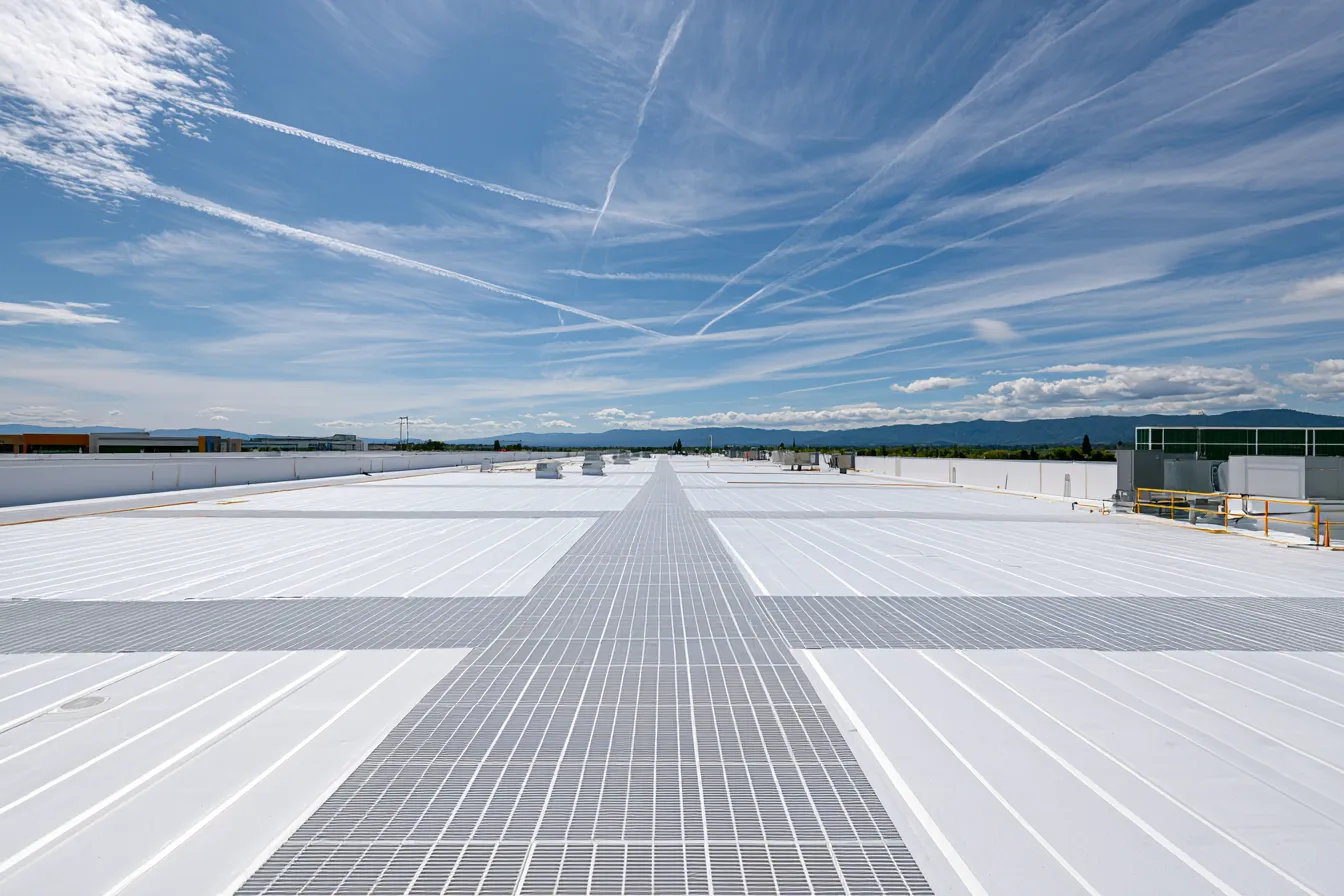
Commercial TPO Roofing in Olathe, KS
Most newer Olathe buildings wear a white TPO membrane: one heat-welded single-ply skin that seals flat and reflects the sun. Commercial TPO roofing in Olathe, KS lives or dies at its welded seams.
- A dated read of the membrane and its seams
- Mil thickness and system named in writing
- One scope, one number, on your timeline
Call (913) 210-3979
What commercial TPO roofing does for Olathe
TPO is a thermoplastic single-ply membrane, a light-colored sheet whose seams are heat-welded into one continuous, watertight skin rather than glued. On an Olathe office, strip retail center, or warehouse it is the common choice today, and the bright surface pushes summer sun back off the roof to ease the cooling load.
Commercial TPO roofing pays off in Olathe on two fronts: a reflective summer surface that eases the cooling load, and welded seams that seal the whole roof into one watertight skin. A local roofer measures the roof, names the membrane thickness, and welds every seam to spec, then documents it before a number is set.

What a TPO assessment puts on record
A read of a TPO roof, or a plan for a new one, comes down to a short list an owner can see line by line before anything is priced.
- 01The membrane thickness, chosen not defaulted
- TPO comes in thicknesses, commonly 45, 60, and 80 mil, and a thicker sheet resists punctures, hail bruising, and UV longer. A roofer matches the mil to how much rooftop traffic your HVAC service draws and to Johnson County summer hail, rather than defaulting to the thinnest sheet a low bid can carry.
- 02Every seam heat-welded into one skin
- The seams are where a single-ply roof holds or fails, so each one is hot-air welded, not taped or glued, into a continuous watertight surface. A roofer probes the finished welds, because a weld that looks closed but never fully fused is the first place the roof leaks.
- 03The reflective cool-roof question, weighed against the code
- A white TPO surface reflects sunlight and can cut summer cooling load and rooftop temperature. Whether a reflective roof is also expected by the current energy code is a local call, so a roofer confirms it against the adopted code rather than promising a mandate or waving it off.
- 04The cold-weather install window
- Heat-welded seams and membrane adhesives want the right temperature to bond, so a Kansas winter narrows when a TPO roof goes down cleanly. A roofer schedules the install to the weather and the building's hours instead of forcing a weld in a hard freeze.
- 05Flashings, curbs, and drains detailed and sealed
- Every rooftop unit, pipe, and drain is a place the membrane is interrupted and has to be sealed, and those details are where a flat roof leaks first. A roofer flashes each penetration and checks that water still leaves the roof cleanly.
A flat roof hides hail damage that a pitched roof would show, so a bruised membrane or a split weld reads as nothing from the parking lot. For what a storm can leave on a low-slope roof, the storm damage page lays it out, and the flat-roof and EPDM guide covers the drainage side.
What Olathe owners ask about TPO roofs
The questions building owners raise before putting a TPO membrane on an Olathe roof.
Q1Why is TPO the common choice on Olathe commercial buildings?
Q2What mil thickness should my TPO roof be?
Q3Is a white reflective TPO roof worth it in Kansas?
Q4Can a TPO roof be repaired, or does it need full replacement?
Q5How does TPO hold up to Johnson County hail?
Q6How long will a TPO roof last on my building?
Put your Olathe building's TPO roof on record
A TPO roof holds up only as long as its welded seams do. Put yours on file with Olathe Roofing Co, and a local commercial roofer reads the membrane and its seams, names the mil and the flashing details, and writes one scope and number you can hold until you give the word.