
Roof Repair in Olathe, KS
A good roof repair fixes the real fault, not just the stain it left inside. A local roofer traces the leak to its source and repairs only what failed, then shows you the photos.
- Scope and dollars in writing, then work
- Hail-claim paperwork put in plain English
- One roofer handling the whole job
Call (913) 210-3979
Roof repair that fixes the real fault
Roof repair in Olathe, KS is judged by more than the leak in front of you, because whatever a roofer fixes still has to stand up to the Johnson County hail and wind the roof will see again.
A local roofer pins the one detail that let go, a split boot, a lifted flashing leg, a wind-broken course, repairs it, and leaves the rest of the roof untouched. Caught in time, most of these stay a documented inspection and a modest repair instead of a full re-roof.
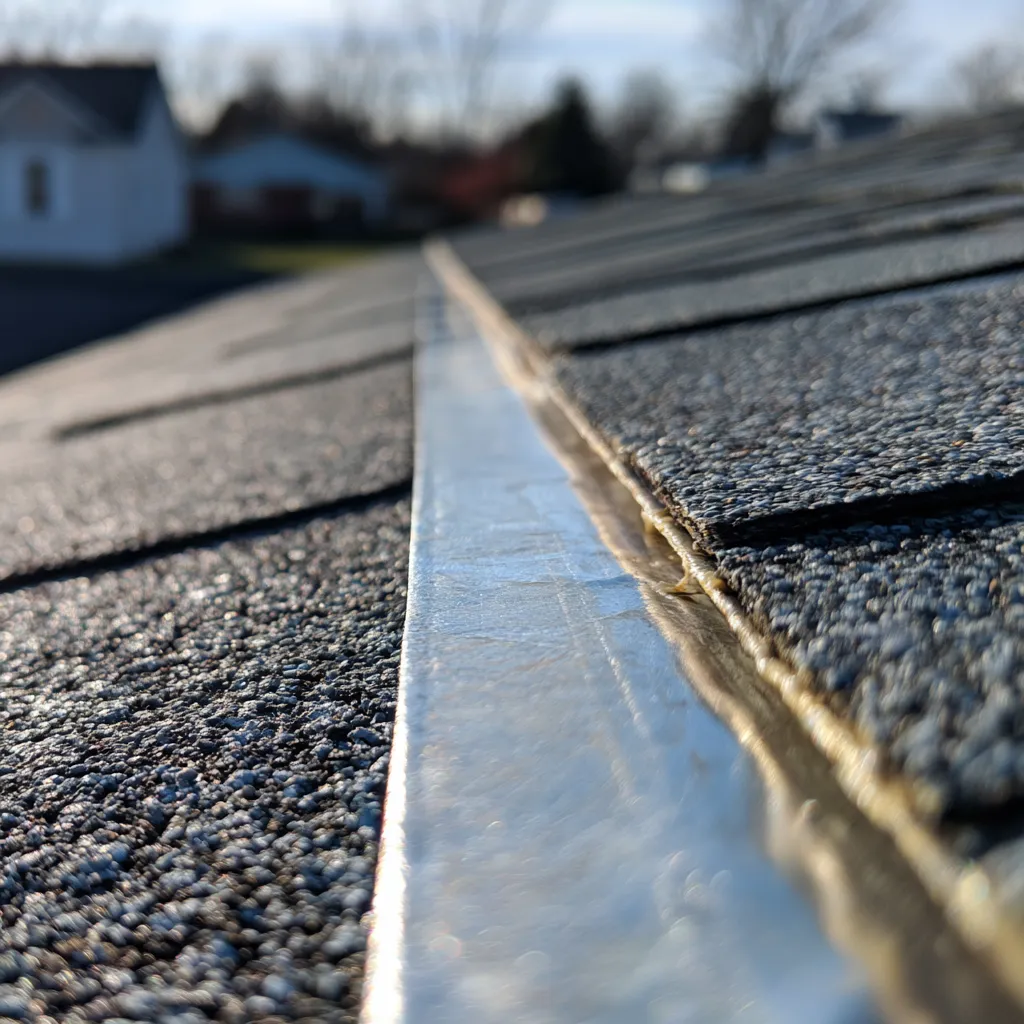
The details that fail first on Olathe roofs
Each part a roofer reads, repairs, and dates before it turns into a leak.
- 01A vent boot split with age
- The rubber collar sealing a plumbing stack turns hard and cracks as it weathers and shrinks over the years, and once it splits, water runs down the pipe into the ceiling while the shingles around it still look fine. The part is cheap to replace and one of the most common finds on an Olathe roof.
- 02Flashing worked loose at a wall or chimney
- Where the roof ties into a sidewall, a chimney, or a valley, the flashing metal is the usual way around the shingles, and years of weather plus a hail season pry it up over time. A roofer re-forms or replaces that metal so the joint sheds water again, no bead of caulk standing in for a real seal.
- 03A course of shingles lifted by wind
- Straight-line wind on the Johnson County record has hit 89 mph, and a gust like that can pop a seal strip or peel back a run of tabs. Where the roof still has years in it, re-securing that one lifted course is usually the entire fix.
- 04Hail bruises left by a summer storm
- Johnson County hail has run to 3.50 inches on the record, and a bruise that cracks the shingle mat can let water in months later even while the surface still looks whole. A roofer marks each strike and, where it becomes a claim, dates it to the storm.
Not certain which detail failed? A dated inspection gets the real opening on record with photos, and when a summer hailstorm is behind it, the storm-damage guide shows how to document the loss before the next storm buries the evidence.
Signs worth catching while they are small
Any one of these is worth a look while it is still small.
- Flashing sealant at a chimney or sidewall split open after a winter of freeze-thaw
- A run of shingle tabs lifted or curled where the last gust caught the ridge
- An upstairs ceiling or wall stain that darkens after a rain or a summer storm
- Ice building thick along the gutter line in winter, a sign the eaves are backing up
- A plumbing-vent collar gone brittle, split, or chalky where it meets the pipe
Catching one early keeps the repair small and off your to-do list. Where the same spot keeps taking hail, a roofer will talk through whether an impact-rated shingle is worth it at the next re-roof.
What sets the price of a repair
What you pay tracks the fault, not the square footage. A single cracked boot is a small bill; loose flashing along a wall, a rebuilt valley, or a wind-torn run of shingles moves it up.
The detail that swings the number on an Olathe roof is the eave. Resetting flashing or laying a self-sealing barrier where a repair reopens the roof edge takes more than a mid-slope seal. A roofer states the figure in writing once the cause is found, never before, and the cost guide lays out full replacement ranges for the day they are needed.
See full replacement ranges- One failed part means a repair, never a reason to tear off a roof with life left
- A cracked boot is the cheap end; flashing, a valley, or a wind-torn section runs higher
- Eave and edge work adds labor that a simple mid-roof seal does not
- The figure is written down only once the cause is pinned, so it will not creep
In Olathe, age decides the repair-or-replace call
Whether a repair is the right money comes down mostly to one thing: the roof's age. On a newer or well-kept mid-life roof, a failed detail is a clean repair with real service life left to protect.
On an older Olathe roof the same leak can be the first sign the covering is spent, and a patch will not carry a roof already worn thin by hail seasons and a Kansas winter. A local roofer tells you which one yours is, with photos and in writing, before a number is named.
- 01Younger roofs, a clean repair
- On newer and well-kept mid-life roofs, the boots, flashings, and seal strips give out long before the shingle field, so resetting the failed one is the whole job and it holds.
- 02Older roofs, one hard question first
- On older homes the same failed detail can mean the covering is running out of years, and a roofer says so before you pay to patch a roof the weather will finish anyway.
Unsure if this is one repair or the start of a replacement? A roofer gives you that call in writing, with the photos, before a dollar moves either way, and the warranty guide lays out how a repair affects any coverage still on your shingles.
Roof repair questions Olathe owners ask
Clear answers before you book the visit.
Q1My roof is older. Is a repair even worth it?
Q2The shingles look fine from the street. Where is the water getting in?
Q3A hailstorm just came through. Should I repair or file a claim?
Q4Will a repair done now actually last?
Q5Will the repair come with a warranty?
Q6How fast can a repair happen after I reach out?
Fix the cause before it spreads
A creeping stain, a missing shingle, or a drip that will not quit? Tell Olathe Roofing Co where the roof is acting up, and a local roofer finds the real cause, shows you the photos, and puts one fair repair price in writing, the repair-or-replace call first.