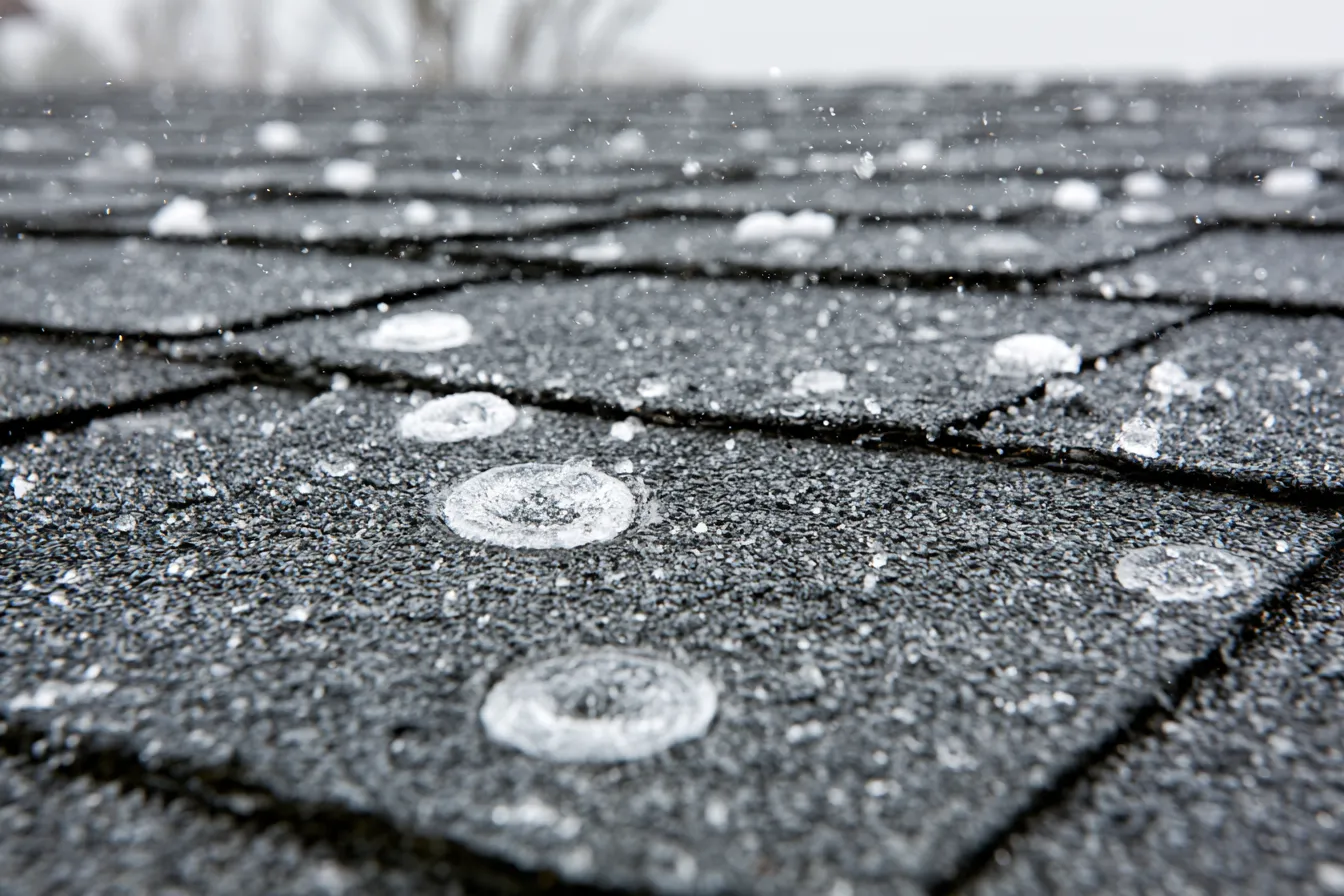
A stain spreads across the ceiling a day after a snow melts off the roof, and the first thought for most Olathe homeowners is a practical one: is this something my insurance covers? It is a fair question, and unlike a summer hail claim, a winter leak does not come with an obvious answer. Whether a roof insurance claim in Olathe, KS holds up turns on how the water got in and on what you can put on paper. Kansas writes its own rules here, not a neighboring state's. There is no special state hail-claim clock stretching your deadline; what governs is your own policy and the Kansas Consumer Protection Act. Here is a plain read on when a winter roof leak is a claim on an Olathe home, how a Kansas carrier tends to look at it, and what documentation carries it, laid out alongside the fuller claims walkthrough.
When a winter leak is sudden, and when it is not
Start with the distinction that decides most winter claims, because insurance turns on it. Homeowner policies are generally built to cover sudden and accidental damage, not slow wear and tear. When an ice dam backs a pool of water under the shingles during a thaw and it drips through a ceiling, that is usually a sudden water-intrusion event, and it often falls on the covered side of the line. A carrier can still weigh whether the roof was maintained, but the leak itself reads as an event, not a slow decline.
What generally does not make a claim is a roof that was simply worn out. A leak from years of aged, brittle shingles, an old flashing that finally gave up, or a maintenance problem a homeowner let ride is wear, and wear is what a deductible and ordinary upkeep are for. This is why calling every winter leak storm damage backfires: the honest framing, sudden ice-dam water versus long-term wear, is exactly the read a Kansas adjuster is making, and getting it right up front keeps a claim credible.
How a Kansas carrier reads winter damage
Winter gives a roof more than one way to make a legitimate claim, and it is not only hail that counts. Beyond ice-dam water intrusion, a winter wind event that lifts or tears shingles, or a limb brought down by an ice storm that punctures the roof, is the kind of sudden damage a policy is written for. The common thread is a specific event that did specific harm, dated and documented, rather than a slow problem that crept up over seasons.
One Kansas rule is worth knowing before anyone knocks on your door. Under the Kansas Consumer Protection Act, a roofer paid from insurance proceeds may not pay, rebate, or absorb your deductible, and offering to do so is treated as an unconscionable act. You pay your own deductible; that is normal and it is the law. A roofer who offers to make it disappear is offering to break a Kansas statute; a straight one builds an honest scope and lets your carrier settle the rest. The warranty page covers what does and does not carry a promise in writing.
The Kansas clock is your policy's, not a state rule
Here is where an Olathe homeowner should ignore anything a friend across the state line tells them. Kansas has no special statute stretching a hail or storm roof claim to a fixed number of months, so do not count on a rule like that here. What sets your deadline is your own policy, and Kansas courts will enforce a suit-limitation clause written into it.
In plain terms, the statute of limitations on a written contract in Kansas runs several years, but your policy can and often does set a much shorter clock, commonly one to two years from the date of loss, to report a claim or to sue on it. So read your own policy for its reporting and suit deadlines and file promptly rather than sit on winter damage. When in doubt, your policy and the Kansas Insurance Department, not a neighbor's rule of thumb, are the authorities.
What documentation carries a Kansas claim
A winter claim lives or dies on the record, even more than a hail claim, because the damage is easy to write off as wear. The goal is to show a carrier that a specific event did specific harm, and that means getting it on paper while it is fresh. After a snow that leaves a leak, a local roofer documents the roof and the attic so the story is clear:
- Dated photos of the ice dam, the icicles, and the eaves where the water backed up, tied to the snow event that caused it.
- Interior shots of the ceiling or wall stain and any damp, matted attic insulation, showing where the water landed inside.
- A written read of the roof that separates this event's damage from ordinary wear, so the claim is not confused for an aging roof.
- Notes on flashing, sealant, or shingles the freeze-thaw opened, dated to the cold spell rather than left to memory.
- A repair scope that reflects the real work, from the eaves detail out to any winter leak repair inside.
Your policy, your name, your deductible
Be clear on who does what, because a claim goes smoothest when the roles stay separate. You, the policyholder, own the claim, talk to your carrier, and make the decision to file, since your name is on the policy. A local roofer inspects the roof and attic, documents what the winter did, and explains it in plain terms, so your conversation with the insurer is an informed one. Olathe Roofing Co never climbs a roof, speaks for your carrier, or touches your deductible.
One more thing is already handled on our end: every roofer Olathe Roofing Co sends carries a current Kansas Roofing Registration Act registration and insurance before the job starts. Pair that with a dated record and your own read of the policy, and a winter claim on an Olathe roof stops being a guessing game. The roofing-permits page explains the Kansas registration and the city permit a re-roof pulls.
Woke up to a winter stain on the ceiling and wondering whether it is a claim? Send Olathe Roofing Co your address, and a local roofer will document the roof and attic, separate the storm damage from ordinary wear, and lay out where a Kansas claim stands, at no cost. Ask, and the answer comes back plainly.
See if your winter leak is a claim Call (913) 210-3979